Why a Non‑Surgical Path Matters
At the Orthopedic Spine Institute of St. Louis, the patient‑first philosophy means every treatment plan begins with a thorough, individualized assessment and a commitment to non‑surgical options whenever possible. Evidence‑based conservative care—such as targeted physical‑therapy, guided exercises, heat/ice modalities, and precise spinal injections—is the first line of therapy, supported by clinical guidelines and outcomes data. By avoiding unnecessary surgery, patients reduce the risk of complications, preserve natural spinal anatomy, shorten recovery time, lower overall costs, and maintain a faster return to daily activities. It empowers patients to stay active and thrive.
Foundations of Conservative Spine Care
| Step | Intervention | Example / Details | Expected Outcome |
|---|---|---|---|
| 1️⃣ Patient Education | Explain anatomy, pain mechanisms, activity pacing | Links to reputable sources, brochures | Empowered patient, realistic expectations |
| 2️⃣ Pharmacologic First‑line | NSAIDs or muscle relaxants | Ibuprofen 400‑600 mg q6‑8 h; Cyclobenzaprine 5‑10 mg qd | Acute pain relief, reduced spasm |
| 3️⃣ Structured PT Program | Core strengthening, flexibility, posture retraining | 2‑3 sessions/week for 6‑8 weeks + home program | Improved function, decreased pain |
| 4️⃣ Home Exercise Regimen | Knee‑to‑chest stretch, cat‑cow, bridge, bird‑dog | 10‑30 reps, 2‑3 × day | Reinforces PT gains, spinal stability |
| 5️⃣ Adjunctive Therapies | Targeted injections, chiropractic, acupuncture, CBT | Epidural steroid, facet joint, RF ablation, mindfulness‑based CBT | Address inflammation, nerve irritation, psychosocial factors |
| 6️⃣ Lifestyle Modifications | Weight management, smoking cessation, ergonomic tweaks, regular aerobic activity | BMI < 25, quit smoking, standing desk, 150 min/week cardio | Long‑term spine health, reduced recurrence |
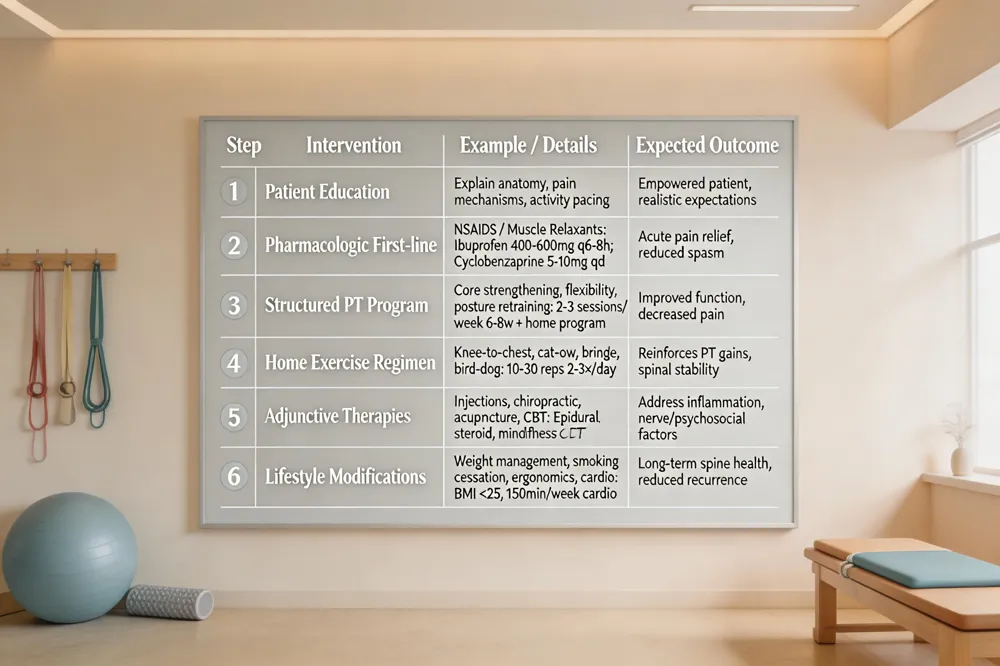 Conservative treatment for back pain refers to non‑surgical strategies that prioritize patient education and rehabilitation before considering invasive procedures. First‑line modalities include NSAIDs or muscle relaxants for acute pain, followed by a structured physical‑therapy program that emphasizes core strengthening, flexibility, and posture retraining. Home exercise regimens—such as knee‑to‑chest stretch, cat‑cow stretch, bridge exercise, and Bird‑Dog Exercise—reinforce therapy gains and improve spinal stability. Adjunctive options like targeted injections (epidural steroid, facet joint, radiofrequency ablation), chiropractic manipulation, acupuncture, and cognitive‑behavioral therapy address inflammation, nerve irritation, and psychosocial factors. Lifestyle changes—weight management, smoking cessation, ergonomic adjustments, and regular low‑impact aerobic activity—further support recovery. Among these, physical therapy combined with a personalized home‑exercise plan is the most common non‑surgical treatment, providing pain relief, functional improvement, and a foundation for long‑term spine health.
Home‑Based Pain Relief and Early Management
| Modality | Typical Duration / Frequency | Primary Goal |
|---|---|---|
| Ice (cold pack) | 20‑30 min, 2‑3 × day for first 48‑72 h | Reduce inflammation & numb pain |
| Heat (warm compress) | 20‑30 min, 2‑3 × day after first 72 h | Relax muscles, improve circulation |
| NSAIDs / Acetaminophen | As per label (usually every 6‑8 h) | Decrease pain & swelling |
| Core‑focused stretching (knee‑to‑chest, cat‑cow, lumbar rotation) | 5‑10 sec per stretch, 10‑30 reps, 2‑3 × day | Improve flexibility & spinal alignment |
| Core strengthening (bridge, pelvic tilt, bird‑dog, shoulder‑blade squeeze) | 5‑10 sec hold, 10‑30 reps, 2‑3 × day | Enhance spinal stability |
| Low‑impact cardio (walking, swimming) | 20‑30 min, most days | Promote circulation & overall health |
| Ergonomic micro‑breaks | 1‑2 min every 30‑60 min of sitting | Prevent prolonged static loading |
| Deep breathing & mindfulness | 5‑10 min, 2‑3 × day | Reduce psychosocial stressors |
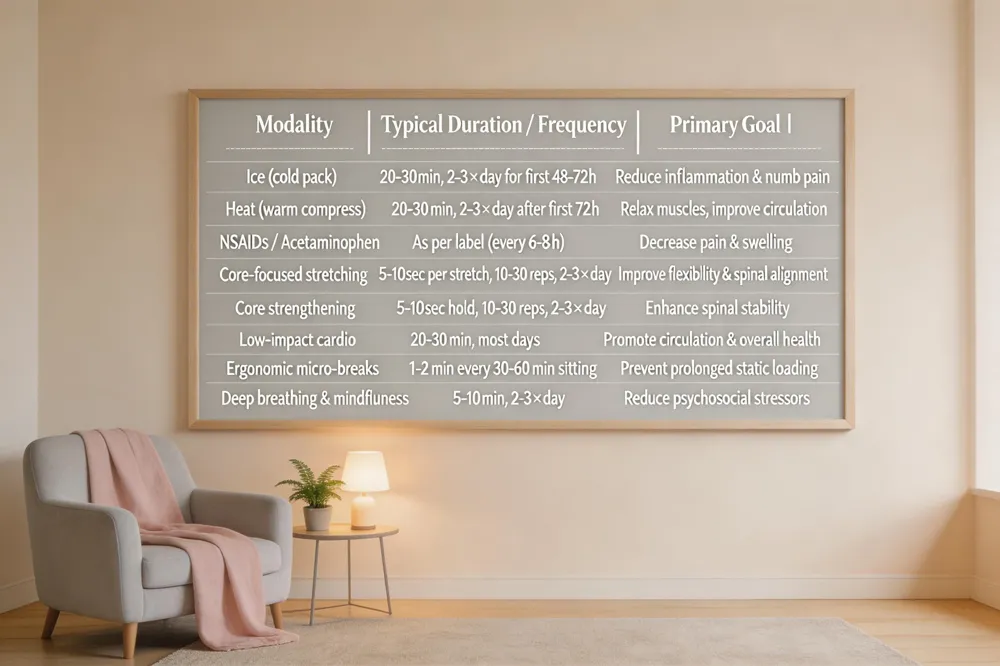 Modern spine care starts with simple, evidence‑based home strategies that can ease severe lower back pain and prevent chronic disability.
Ice and heat protocols – Apply a cold pack for 20‑30 minutes during the first 48‑72 hours after injury to curb inflammation, then switch to a warm compress for 20‑30 minutes to relax tight muscles and improve blood flow.
Over‑the‑counter meds – NSAIDs such as ibuprofen or naproxen or acetaminophen, reduce pain and swelling; follow dosing instructions and avoid use in patients with contraindications.
Core‑focused stretching & strengthening – Gentle stretches (knee‑to‑chest, lower‑back rotational, cat‑cow) improve flexibility, while core‑stabilizers (bridge, pelvic tilt, bird‑dog, shoulder‑blade squeeze protect the spine. Perform each move 5‑10 seconds, 10‑30 repetitions, 2‑3 times daily.
Simple daily routines – Stay active with low‑impact cardio (walking, swimming), maintain ergonomic posture, and incorporate short micro‑breaks from sitting.
Answers to common questions
- How to relieve severe lower back pain: Rest briefly, ice first, then heat; take NSAIDs; do gentle stretches and core work; seek specialist care if pain persists or worsens.
- How to get rid of back pain instantly: Ice 15‑20 min, then heat; NSAID; short cat‑cow or knee‑to‑chest stretch; deep breathing; brief walk.
- Best exercise for spine health: A balanced routine of knee‑to‑chest, pelvic tilt, bridge, and cat‑cow performed daily.
- Spine exercises at home: Combine the above stretches with bridges, leg extensions, and a 15‑minute walk or swim.
- Lower back exercises: Warm‑up, knee‑to‑chest, lumbar rotation, cat‑cow, dead‑bug, bird‑dog, glute bridges, shoulder‑blade squeezes.
- 7 exercises for lower back pain: knee‑to‑chest, cat‑cow, pelvic tilt, bridge, bird‑dog, partial curl, hamstring stretch.
- 3 simple exercises: knee‑to‑chest, piriformis stretch, seated low‑back stretch.
- Can you get DOMS in your lower back?: Yes; it appears 6‑12 hrs after activity, peaks 24‑48 hrs, and resolves within 72 hrs with gentle stretching, heat, and rest.
Early, consistent home care reduces reliance on invasive procedures and prepares patients for any needed advanced treatments at the Orthopedic Spine Institute of St. Louis.
Targeted Interventions: Injections and Advanced Therapies
| Intervention | Delivery Method | Primary Indication | Typical Duration of Relief |
|---|---|---|---|
| Epidural Steroid Injection | Fluoroscopic guidance, transforaminal or interlaminar | Radicular pain from disc herniation or stenosis | 2‑12 weeks (often repeatable) |
| Facet‑Joint Injection | Fluoroscopic, steroid + anesthetic | Facet arthropathy, localized back pain | 4‑8 weeks |
| Radiofrequency Ablation | Thermal lesion of medial branch nerves | Chronic facet‑mediated pain | 6‑12 months |
| Platelet‑Rich Plasma (PRP) | Autologous blood concentrate injected into disc or soft tissue | Degenerative disc disease, tendinopathy | Variable, often 3‑6 months |
| Prolotherapy | Hypertonic dextrose solution | Ligamentous laxity, chronic low‑back pain | 3‑6 months, multiple sessions |
| Stem‑Cell / Exosome Therapy | Injectable biologic (mesenchymal stem cells or exosomes) | Early disc degeneration, research protocols | Experimental, potential long‑term benefit |
| Regenerative Options (PRP + PRP + | ) | cells of PRP with stem cells | Severe disc degeneration |
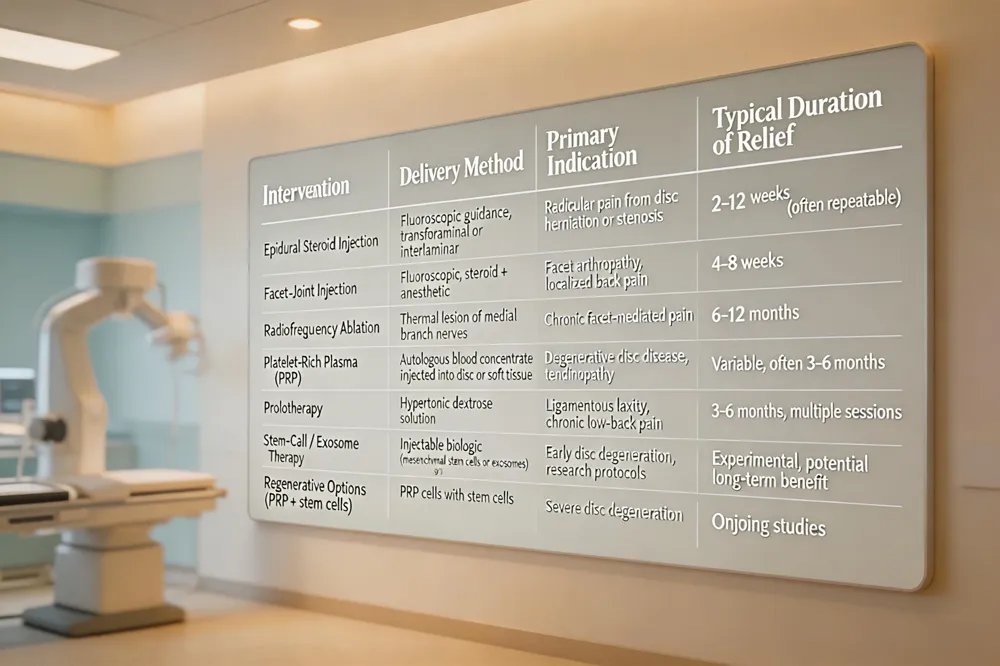 Targeted interventions begin after a disciplined trial of NSAIDs, heat/ice, and core‑strengthening physical therapy. Epidural steroid injections, performed under fluoroscopic guidance, deliver corticosteroids directly to inflamed nerve roots, providing rapid relief for radicular pain. Facet‑joint injections similarly reduce inflammation in arthritic facet segments. When pain persists, radiofrequency ablation creates thermal lesions that interrupt nociceptive signaling, while regenerative options such as platelet‑rich plasma and prolotherapy promote tissue healing. Emerging biologics—including stem‑cell and exosome therapies—are being studied to restore disc integrity. Candidates for minimally invasive surgery are those with documented structural lesions after ≥6 weeks of conservative care, good overall health, and willingness to engage in postoperative rehab. L4‑L5 pathology often resolves with these non‑operative measures, and the newest approach for spinal stenosis is ultra‑minimally invasive endoscopic decompression combined with robotic navigation.
Minimally Invasive Surgical Options and Recovery
| Procedure | Technique Highlights | Typical Indications | Recovery Milestones |
|---|---|---|---|
| Endoscopic Micro‑Discectomy (L5‑S5) | Tiny incision, tubular retractor, endoscope | Herniated disc with radiculopathy | Light activities 1‑2 wks; non‑manual work 2‑4 wks; full function 6‑12 wks |
| Percutaneous TLIF (L5‑S1) | Minimally invasive fusion via percutaneous screws | Segmental instability, spondylolisthesis | Ambulation day 1‑2; office work 4‑6 wks; unrestricted activity 3‑6 mos |
| Minimally Invasive Laminectomy | Endoscopic decompression, robotic navigation | Spinal stenosis, neurogenic claudication | Bed‑to‑chair day 0; walking same day; light tasks 1‑2 wks; full activity 3 mos |
| Radiofrequency Ablation | Thermal lesion of medial branch nerves | Facet joint arthritis pain | Return to normal activity within 1‑2 wks |
| Endoscopic Decompression (ultra‑minimally invasive) | Endoscope with laser/laser‑assisted removal | Multi‑level stenosis | Early mobilization, full recovery 3‑4 mos |
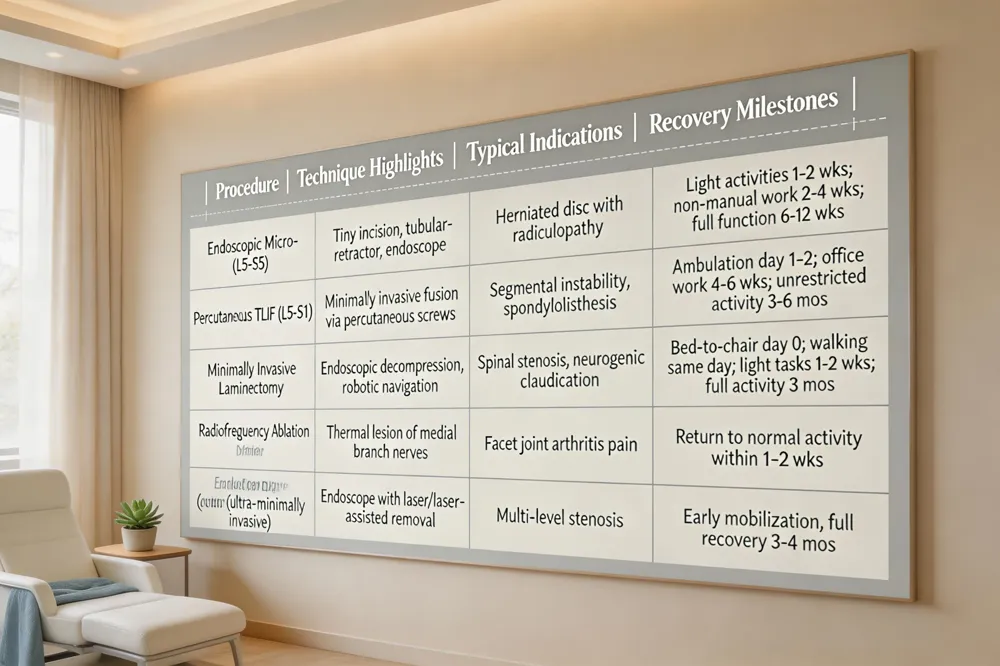 Minimally invasive spine surgery L5‑S1
Endoscopic micro‑discectomy, endoscopic decompression, or percutaneous TLIF at L5‑S1 use a tiny incision and a tubular retractor or endoscope to reach the disc while sparing muscle. The procedure removes herniated material, bone spurs or stabilizes the segment, relieving nerve compression that causes low‑back, leg or sciatica pain. Because tissue disruption is minimal, blood loss, postoperative pain and hospital stay are all reduced. Ideal candidates are patients who have exhausted conservative care (physical therapy, medication, injections) and have clear imaging‑confirmed pathology at L5‑S1.
Minimally invasive spine surgery L5‑S1
Endoscopic micro‑discectomy, endoscopic decompression, or percutaneous TLIF at L5‑S1 use a tiny incision and a tubular retractor or endoscope to reach the disc while sparing muscle. The procedure removes herniated material, bone spurs or stabilizes the segment, relieving nerve compression that causes low‑back, leg or sciatica pain. Because tissue disruption is minimal, blood loss, postoperative pain and hospital stay are all reduced. Ideal candidates are patients who have exhausted conservative care (physical therapy, medication, injections) and have clear imaging‑confirmed pathology at L5‑S1.
Recovery timelines and activity milestones Most patients resume light daily activities within 1‑2 weeks and return to non‑manual work in 2‑4 weeks. Full functional recovery, especially for physically demanding jobs, generally occurs in 6‑12 weeks. Physical therapy starts within a few days to promote mobility, core strength and prevent stiffness. Specific procedures vary: a microdiscectomy or minimally invasive laminectomy heals in about 6‑10 weeks, while a minimally invasive fusion may need 3‑6 months before unrestricted activity.
Can you walk after spinal fusion surgery? Early mobilization is encouraged; short assisted walks usually begin within the first 24‑48 hours. Walking improves circulation, reduces clot risk and gently moves the spine while the fusion matures. Distance and pace are increased gradually, with most patients able to walk unassisted by the end of the first week.
Minimally invasive laminectomy recovery Patients often get out of bed and walk the same day. Light household tasks can resume within 1‑2 weeks; office or light‑work duties by 4‑6 weeks; full unrestricted activity by three months. Heavy lifting and prolonged sitting are avoided until cleared.
Sitting in a recliner after fusion Clearance is typically given at 4‑6 weeks. Use a firm recliner with modest back‑angle, employ a log‑roll transition, and continue to avoid bending, lifting or twisting.
Cost considerations MIS lumbar procedures range $10,000‑$30,000; more complex endoscopic or laser techniques may exceed $35,000. Insurance usually covers most of the bill after deductibles, leaving a few thousand dollars out‑of‑pocket. Uninsured patients can face $50,000‑$150,000, making financing options and patient‑loan programs important for many.
Special Populations and Lifestyle Optimization
| Population | Key Considerations | Tailored Interventions | Lifestyle Tips |
|---|---|---|---|
| Female patients | Hormonal ligament laxity, pregnancy load, higher osteoporosis risk | Pelvic‑tilt, core‑strengthening, bone‑density screening, yoga & mindfulness | Low‑impact cardio, adequate calcium/vitamin D, smoking cessation, ergonomic workstation |
| Pregnant women | Shifted center of gravity, lumbar lordosis increase | Modified core work (bird‑dog, side‑lying bridges), prenatal Pilates, avoid supine positions after 20 wks | Frequent micro‑breaks, supportive mattress, prenatal swimming |
| Post‑menopausal women | Decreased bone density, sarcopenia | Resistance training, vitamin D & calcium supplementation, weight‑bearing exercise | Balanced diet, fall‑prevention strategies, regular DXA scans |
| General special populations (elderly, obese) | Comorbidities, reduced mobility | Low‑impact aerobic (water‑aerobics), seated core work, gradual progression | Weight management, assistive devices if needed, regular follow‑up |
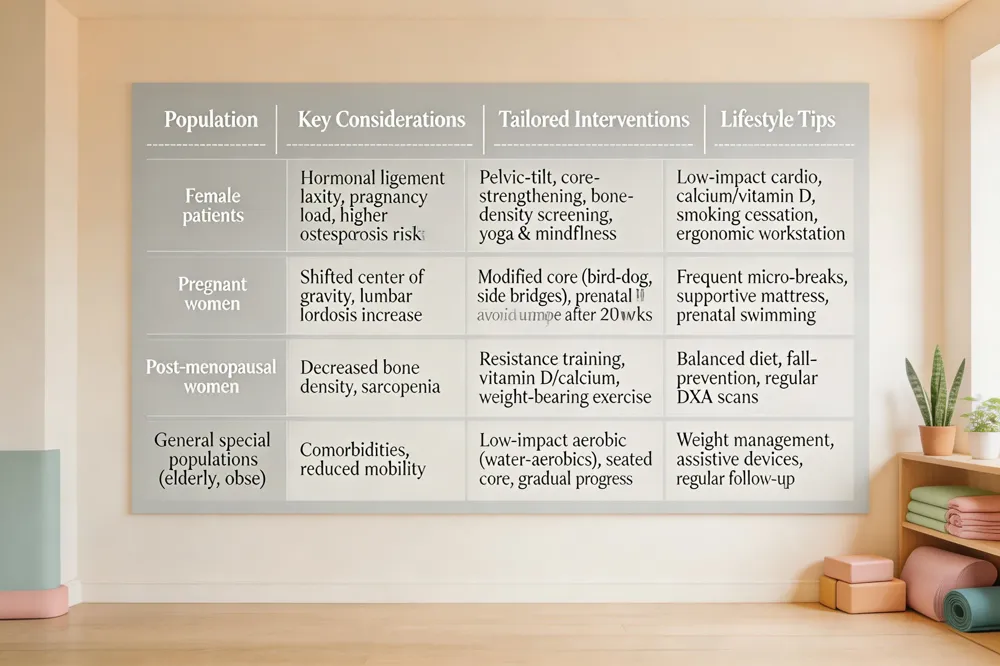 Female lower back pain treatment begins with the same conservative plan used for all patients—low‑impact aerobic activity, a structured PT program, and appropriate NSAIDs or acetaminophen. Women’s unique factors such as hormonal ligament laxity, pregnancy‑related load, and higher osteoporosis risk call for pelvic‑tilt and core‑strengthening exercises, bone‑density screening when indicated, and mind‑body practices like yoga or mindfulness. Common causes in females include hormonal fluctuations, pregnancy posture changes, osteoporosis, and typical musculoskeletal strains. To increase spinal blood flow, engage in walking, swimming or cycling, add regular stretching or Pilates, use alternating heat‑cold packs, and stay well‑hydrated. Improving spinal health involves core and flexibility work, smoking cessation, a diet, ergonomic workstation setup, and follow‑up. The best treatment starts with NSAIDs, heat/ice and exercise, moving to injections or invasive procedures only if pain remains.
Your Path to a Pain‑Free Spine Starts Here
Non‑surgical care begins with patient‑centered education, ice/heat, NSAIDs, and a structured home‑exercise program—core strengthening, flexibility stretches, and low‑impact aerobic activity. Physical therapy adds manual therapy, targeted strengthening, and ergonomic coaching, while interventional injections (epidural steroid, facet joint) provide temporary relief when pain persists. If pain remains severe after 6‑8 weeks of consistent conservative treatment, or neurological deficits develop, minimally invasive options such as robotic‑assisted decompression or radiofrequency ablation may be warranted. Schedule a personalized consultation with Dr. David S. Raskas to discuss your next steps toward a pain‑free spine.